

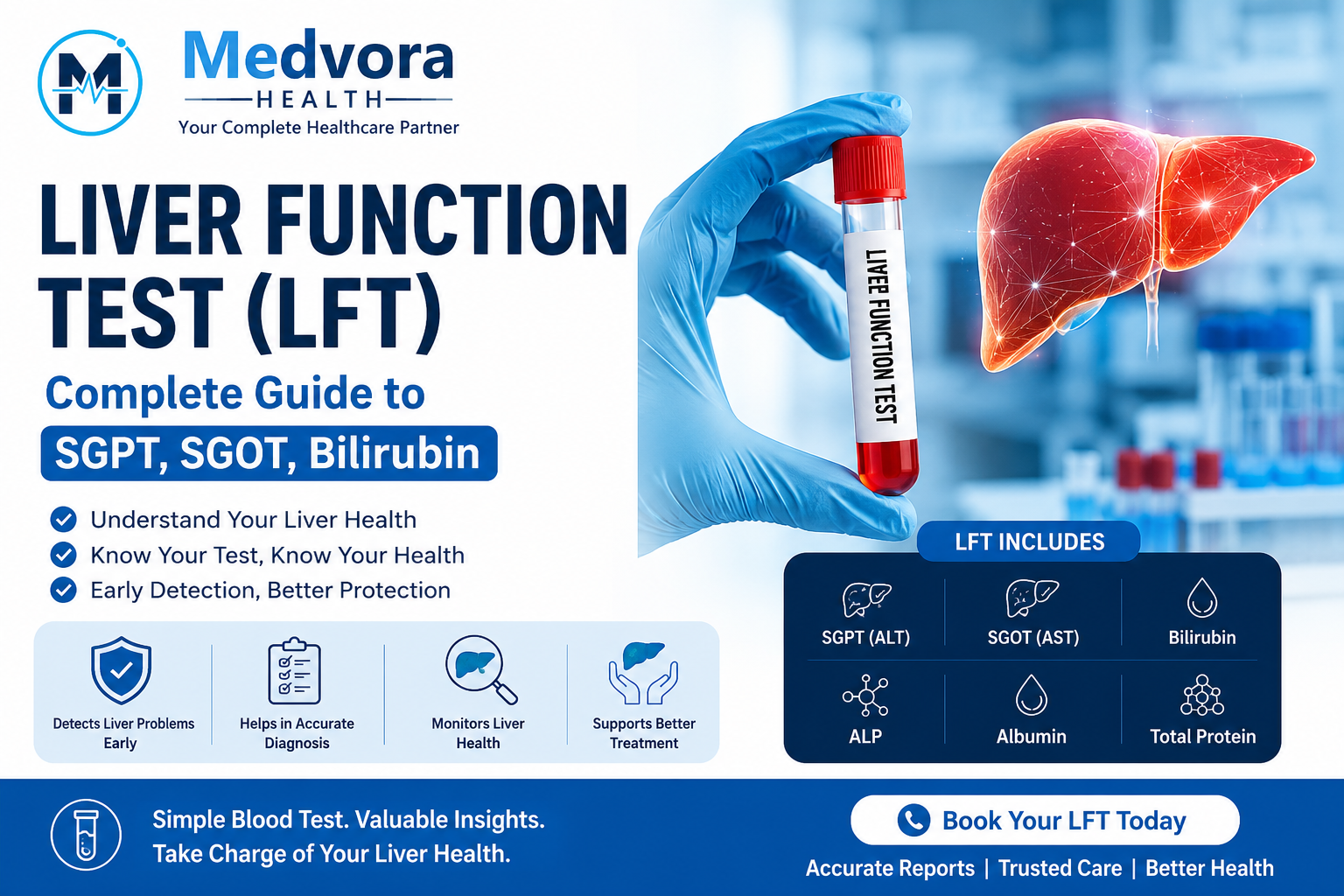
**Excerpt:** A Liver Function Test (LFT) is a group of blood tests that helps assess liver health and identify signs of liver injury, inflammation, or bile-flow problems. It commonly includes **SGPT (ALT), SGOT (AST), bilirubin, ALP, albumin, and total protein**. Understanding these markers can help you better understand your liver health and discss abnormal results with a healthcare professional.
The Liver Function Test (LFT) is a group of blood tests used to assess liver health and identify signs of liver injury, inflammation, or problems with bile flow. An LFT commonly includes tests such as SGPT (ALT), SGOT (AST), bilirubin, alkaline phosphatase (ALP), albumin, and total protein.
Liver problems can sometimes develop without obvious symptoms. This is why an LFT may be recommended during routine health checkups or when symptoms such as jaundice, unusual tiredness, abdominal discomfort, or dark urine occur.
If you are looking for an LFT test in Delhi, understanding what the test measures and what the results mean can help you have a more informed conversation with your healthcare professional.
What Is a Liver Function Test (LFT)?
A liver function test,Health—Making also called a liver profile or liver panel, is a blood test that measures several substances produced or processed by the liver.
Despite the name, not every LFT parameter directly measures how well the liver performs its functions. Some values are more useful for detecting liver cell injury or bile duct problems, while others provide information about the liver's ability to make important proteins.
An LFT may help healthcare professionals evaluate:
- Liver inflammation or injury
- Bile flow problems
- Jaundice
- Fatty liver
- Hepatitis
- Alcohol-related liver injury
- Medication-related liver injury
- Certain chronic liver conditions
What Tests Are Included in an LFT?
The exact components can vary between laboratories, but a typical LFT may include:
1. SGPT / ALT
SGPT, now commonly called ALT (Alanine Aminotransferase), is an enzyme found mainly in liver cells.
When liver cells are damaged, ALT can be released into the bloodstream, causing the blood level to rise.
High ALT may occur with conditions such as
- Fatty liver disease
- Viral hepatitis
- Alcohol-related liver injury
- Certain medications
- Other causes of liver inflammation or injury
A high ALT result does not automatically mean that a person has a serious liver disease. The result needs to be interpreted alongside other tests and clinical information.
2. SGOT / AST
SGOT, commonly called AST (aspartate aminotransferase), is another enzyme measured in liver blood tests.
AST is found in the liver as well as other tissues, including muscles and the heart. Therefore, an elevated AST is not specific to the liver.
Healthcare professionals usually interpret AST together with ALT and other LFT parameters.
3. Bilirubin
Bilirubin is produced when red blood cells are broken down. The liver processes bilirubin and helps remove it from the body through bile.
An LFT may measure:
- Total bilirubin
- Direct bilirubin
- Indirect bilirubin
High bilirubin can cause jaundice, which may appear as yellowing of the skin or the whites of the eyes.
Possible causes of elevated bilirubin include liver conditions, problems with bile flow, and increased breakdown of red blood cells.
4. Alkaline Phosphatase (ALP)
ALP is an enzyme associated with the liver and bile ducts, but it is also found in bones and other tissues.
An elevated ALP can occur with certain bile duct or liver conditions, although other causes are possible.
5. Albumin
Albumin is a protein produced by the liver. It helps maintain fluid balance in the bloodstream and transports various substances through the body.
Low albumin may occur for several reasons and does not necessarily indicate liver disease by itself.
6. Total Protein
Total protein measures the overall amount of certain proteins in the blood, including albumin and globulins.
It may be assessed along with other LFT parameters to provide additional information about overall health and liver-related conditions.
What Is the Normal Range for SGPT and SGOT?
There is no single universal normal range for SGPT/ALT and SGOT/AST. Reference ranges can vary depending on the laboratory, testing method, age, sex, and other factors.
Therefore, always compare your result with the reference range printed on your laboratory report.
A result outside the laboratory's reference range does not automatically mean that you have liver disease. Your healthcare professional may consider your symptoms, medical history, medications, alcohol intake, other blood tests, and sometimes imaging studies before determining the cause.
What Does High SGPT Mean?
A high SGPT/ALT level can indicate that liver cells have been irritated or damaged.
Possible causes include:
- Fatty liver
- Viral hepatitis
- Alcohol consumption
- Certain medications
- Obesity and metabolic conditions
- Liver inflammation
- Other liver disorders
The degree of elevation and the pattern of other test results are important when interpreting ALT.
What Does High SGOT Mean?
A high SGOT/AST level can occur when cells in the liver or other tissues are damaged.
Possible causes include:
- Liver disease
- Alcohol-related liver injury
- Muscle injury
- Certain medications
- Viral hepatitis
- Other medical conditions
Because AST is found in several tissues, an elevated AST should not be interpreted as proof of liver disease on its own.
What Does High Bilirubin Mean?
High bilirubin can result from problems involving:
- Red blood cell breakdown
- Bilirubin processing by the liver
- Bile drainage
Elevated bilirubin may be associated with jaundice, dark urine, or pale stools, depending on the underlying cause.
If bilirubin is significantly elevated or accompanied by symptoms such as yellow skin or eyes, abdominal pain, fever, vomiting, or severe weakness, medical evaluation is important.
Can an LFT Detect Fatty Liver?
An LFT can provide useful information about liver health, but an LFT alone cannot reliably diagnose fatty liver.
Some people with fatty liver can have normal liver enzyme levels. When fatty liver is suspected, a healthcare professional may consider factors such as medical history, metabolic risk factors, blood tests, and imaging such as an ultrasound.
Can an LFT Detect Hepatitis?
LFT results can show patterns of liver injury that may occur with hepatitis, but an LFT does not identify every type of hepatitis by itself.
Specific hepatitis blood tests may be required to determine whether a person has a particular viral hepatitis infection.
Why Is an LFT Recommended?
A healthcare professional may recommend an LFT when there are symptoms or risk factors associated with liver problems.
Common reasons include:
- Routine health screening
- Jaundice
- Unexplained fatigue
- Abdominal discomfort
- Dark urine
- Suspected fatty liver
- Suspected hepatitis
- Monitoring certain medications
- Monitoring an existing liver condition
- Alcohol-related liver concerns
Is Fasting Required for an LFT?
Fasting requirements can vary depending on the laboratory and whether other tests are being performed at the same time.
If your healthcare professional or diagnostic laboratory has provided fasting instructions, follow them carefully. If you are unsure, confirm the preparation requirements before giving your blood sample.
How Is the LFT Blood Test Performed?
An LFT is performed using a blood sample.
The usual process is simple:
- A healthcare professional cleans the area.
- A small amount of blood is collected from a vein.
- The sample is sent to the laboratory.
- The laboratory measures the required LFT parameters.
- Results are provided in a laboratory report.
The test generally takes only a short time for sample collection.
How to Prepare for a Liver Function Test
Preparation depends on the specific test panel and your healthcare provider's instructions.
Before your test:
- Follow any fasting instructions provided.
- Inform your healthcare professional about medicines and supplements you take.
- Avoid alcohol if your healthcare professional advises you to do so.
- Tell the laboratory about any relevant medical history.
- Do not stop prescribed medicines unless your healthcare professional tells you to.
When Should You Consult a Doctor?
You should consider medical evaluation if you experience symptoms such as
- Yellowing of the eyes or skin
- Persistent unexplained fatigue
- Dark urine
- Pale stools
- Persistent abdominal discomfort
- Unexplained nausea or vomiting
- Swelling of the abdomen or legs
An abnormal LFT result should also be discussed with a healthcare professional, particularly if the abnormality is significant or persistent.
Frequently Asked Questions About LFT
What is a liver function test?
A liver function test is a group of blood tests used to evaluate liver health and detect signs of liver injury, inflammation, or bile-flow problems.
What are SGPT and SGOT?
SGPT is commonly known as ALT, while SGOT is commonly known as AST. They are enzymes measured in blood tests and can increase when certain tissues, including the liver, are injured.
What is bilirubin?
Bilirubin is a yellow substance produced when red blood cells break down. The liver processes bilirubin and helps eliminate it through bile.
What does high SGPT mean?
High SGPT/ALT may indicate liver cell injury or inflammation. Fatty liver, hepatitis, alcohol, medications, and other conditions can contribute to elevated ALT.
What does high SGOT mean?
High SGOT/AST can occur with liver injury but can also result from injury to other tissues such as muscles. It should therefore be interpreted with other test results.
Is an LFT done on an empty stomach?
Not always. Fasting requirements depend on the laboratory and the other tests being performed. Follow the specific instructions given for your test.
Can an LFT detect fatty liver?
LFT results can provide information about liver health, but an LFT alone cannot reliably diagnose fatty liver. Imaging and clinical assessment may also be required.
How often should I get an LFT?
The frequency depends on your health, symptoms, risk factors, medications, and healthcare professional's advice. There is no single testing schedule that applies to everyone.
Where can I get an LFT test in Delhi?
If you are looking for an LFT blood test in Delhi, choose a diagnostic provider that offers reliable laboratory testing and clear reporting. Medvora Health can be considered when arranging diagnostic testing, subject to the services available at your location.
Final Takeaway
The Liver Function Test (LFT) is an important group of blood tests that can provide valuable information about liver health. Parameters such as SGPT/ALT, SGOT/AST, bilirubin, ALP, albumin, and total protein each provide different pieces of information.
An abnormal result does not automatically mean that you have liver disease. Results should be interpreted using the laboratory's reference ranges and considered alongside your symptoms, medical history, medications, and other investigations.
If you have been advised to undergo an LFT test in Delhi, timely testing and appropriate medical guidance can help identify potential liver-related concerns and support better health management.
Medvora Health — Making healthcare and diagnostic testing easier to understand.